“Eat your vegetables, they’re good for you!” A phrase that has been engraved in my head ever since I can remember, and I’m sure you also have this phrase tattooed in your mind. Kids everywhere are screaming and crying because they do not want to eat all their broccoli. I thought when I grew up, I would be able to eat pizza for every meal, and be the happiest person on the planet. Well, those crazy scientists are making my dreams impossible with their new research of the gut microbiome, and how it is linked to mental health. Studies done to look at the link between microbiome and mental health are becoming more and more common these days. A study done in Nature Microbiology looked at people’s feces and how the microorganisms present correlated with their quality of life. They found that the presence of Coprococcus and Dialister were not as common in people with clinical depression. This is just one of the many studies conducted that introduces us to the importance of gut health.

The microbiome that lives in the gut varies from person to person. Some people have more diverse microorganisms renting out their gut space, while some have fewer variety in their gut microbiome. In an article by Caroline Horizny, she briefly explains a study conducted that shows gut microbiota composition is in fact different from person to person. Scientists are discovering that this is likely due to the the types of food we eat because different microorganisms enjoy different types of food, and therefore inhabit where the food they like is, just like you and me! Horizny explains these different species of bacteria produce different metabolites, which can influence communication of serotonin and different hormones to the Central Nervous System. In this study, they found that certain bacteria species positively correlated with a more positive mental health. It is as if the “brain” in our guts and the brain in our heads come up with an agreement to be happy together or sad.

Of course all of depression cannot necessarily all be attributed to gut health, so there has been research done involving both gut health and its effects on mental health, in combination with antidepressant medications. In a recent article, Andreu Prado discusses a study, conducted by Dr. Evan Elliot, that used human antidepressants to test mice and their microbiota diversity. In this study, they treated mice with both common human antidepressants, as well as R. flavefaciens. They found that R. flavefaciens decreased gene expression of some genes involved in neurogenesis, which is a factor found in individuals that present with depression. They also found that different antidepressants caused the accumulation of different microorganisms in the gut. Therefore, the effects of anti-depressants are likely changed by what bacteria is already present in the gut. Though human experimentation is lacking in the field of gut microbiome, many new studies are helping scientists understand that it is more important than people once thought to monitor what is being put in the body.
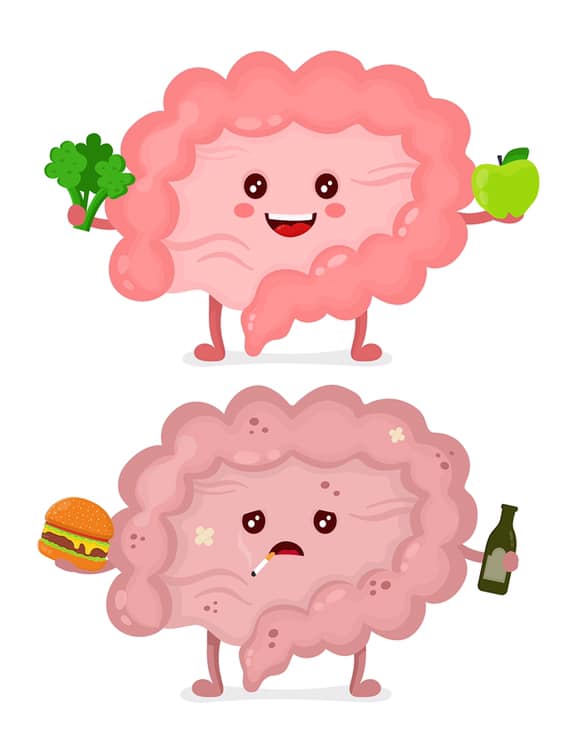
With all that being said, eat your vegetables, and make your gut and soul HAPPY!

 Laura's Food For Thought